
Summer
The core is gone until early February, then rises an hour or two before dawn.
Shoot the Magellanic Clouds, Canopus and star trails.Most Australians live on a bright coast. Drive an hour inland and the night opens up. Here's when to go, what the weather does, where the certified dark places are, and how to come home safe.
The core returns before dawn in early February, rules the whole night by June, and slips away after dusk in early November. Choose a city to see how many dark hours it gives you each month.
The core is gone until early February, then rises an hour or two before dawn.
Shoot the Magellanic Clouds, Canopus and star trails.Pre-dawn becomes midnight, then evening. By May the core is up most of the night.
Crisp, settled nights. The Emu rises after dusk.Prime time. The core is high at dusk and, in June, up all night long.
Long, cold nights. Dress for zero inland.Evenings only. The core sets earlier each week and is gone in early November.
Head out straight after dark.See your own yearSeason Clock puts every month of the core season for your place on one dial.
Open Season ClockThe core season is the same everywhere. The cloud isn't. Here's how the usual weather lines up with the core in each part of the country.
The dry season, May to September, brings reliably clear skies right through core season. The wet, roughly October to April, brings storms and cloud. Late in the dry, smoke from burning can haze the horizon.
Dry air and clear skies for much of the year, and the darkest country of all. Winter nights can fall well below zero. Summer brings heat and the odd storm.
Late summer and autumn are usually the wettest and most humid. Late winter and early spring are often the clearest. Head inland over the ranges for drier air.
Winter rain arrives in fronts, with clear, cold nights in between. Late summer and autumn are often the most settled. The far south is aurora country.
A rough guide from typical seasonal weather, not a forecast. Local conditions vary a lot, especially near the coast and the ranges.
Check the sky before you driveAstro Weather shows cloud by layer, the Moon and the core for your place, hour by hour.
Open Astro WeatherAustralia runs on three time zones. Four states and the ACT add an hour of daylight saving from the first Sunday in October to the first Sunday in April. Queensland, the Northern Territory and Western Australia don't.
Perth, Darwin and Brisbane have no daylight saving, so in summer they fall an extra hour behind Sydney.
DarkSky International recognises places that protect their night through careful lighting. They're wonderful trips, but you don't need one to find a great sky.
Queensland's first, in a vast outback shire of about 1,100 people.
Outside Winton, home of the Australian Age of Dinosaurs museum.
About 870 km² around Maleny, Montville, Mapleton and Kenilworth.
Australia's first, beside Siding Spring Observatory near Coonabarabran.
On Sydney's Northern Beaches. Proof a city can look after its night.
Rugged ranges in the northern Flinders, with its own observatories.
More than 3,200 km², about 100 km east of Adelaide.
A small coastal town on the Fleurieu Peninsula.
DarkSky International's list of places, checked November 2026. Approved dark-sky lodging is not shown. Check opening hours, access and facilities with each place before you go. Map outlines: Natural Earth, public domain.
“There's serious dark sky close to home, not only in the reserves. Country towns. Thirty minutes out.”
of Australia's land sits under a pristine night sky. Most of that darkness is ordinary country, not a plaque on a gate.
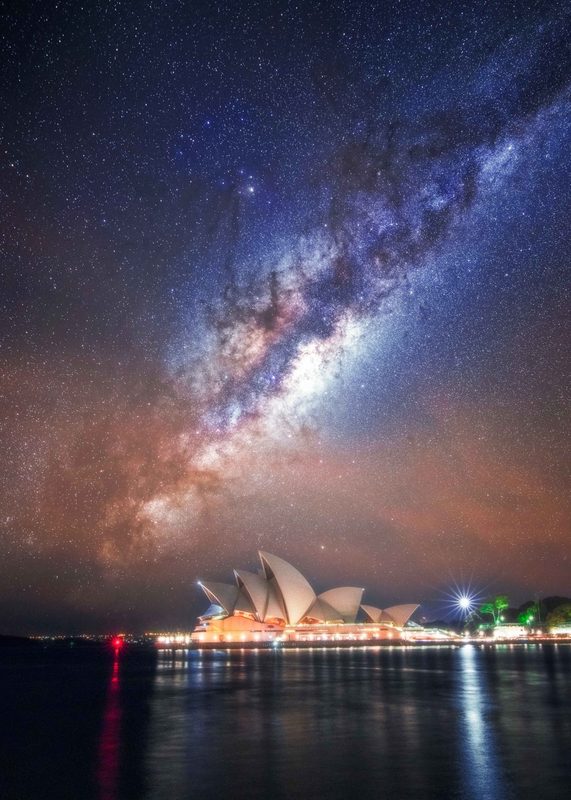
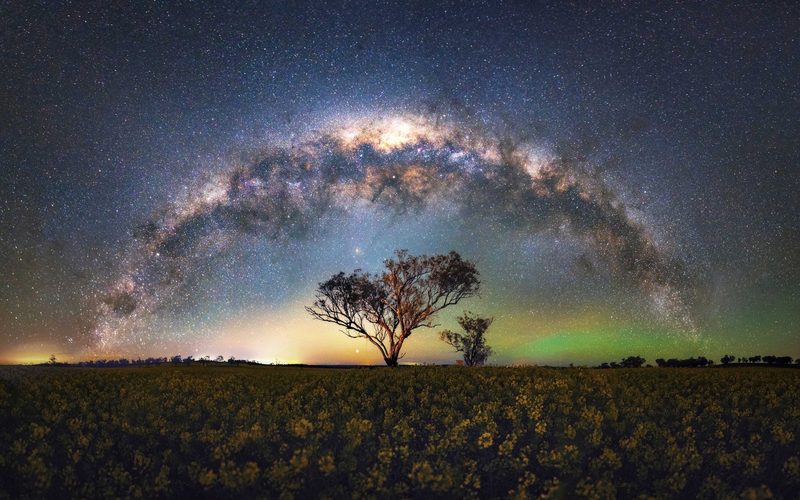
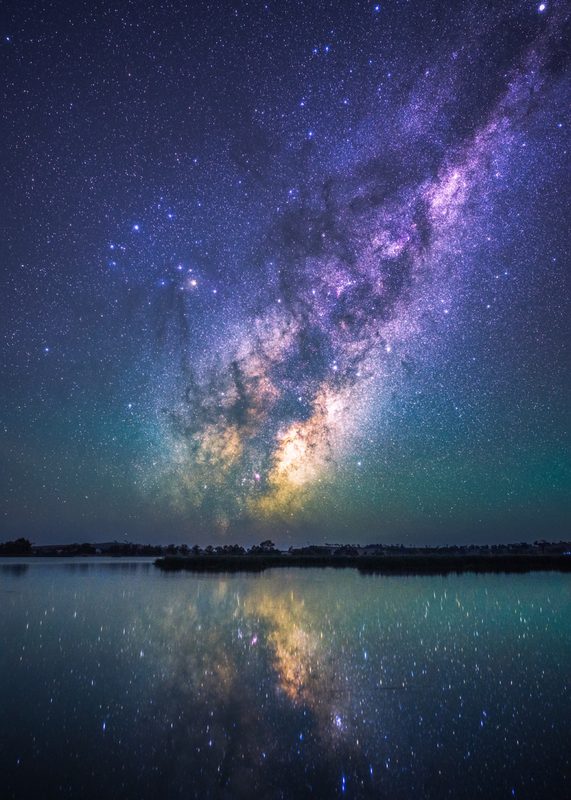
Falchi et al., Science Advances, 2016“You can still shoot the icons, the Opera House included. It isn't only empty outback.” A few of David's frames from around the country.
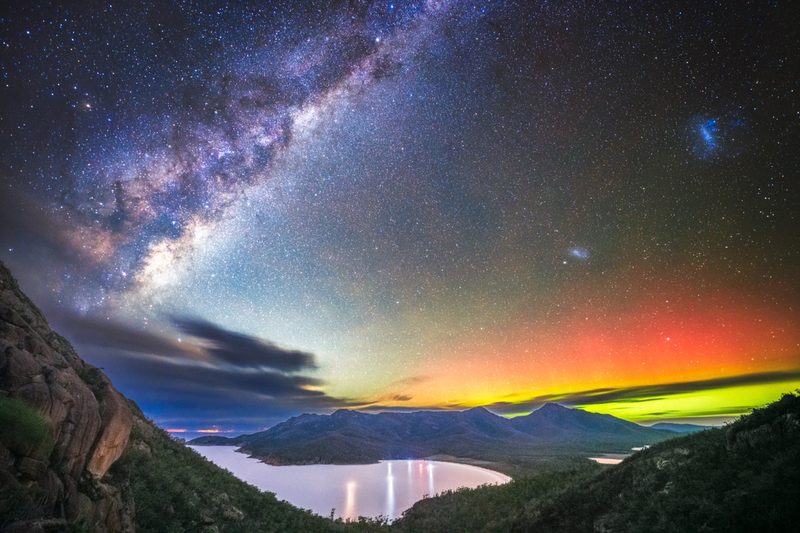
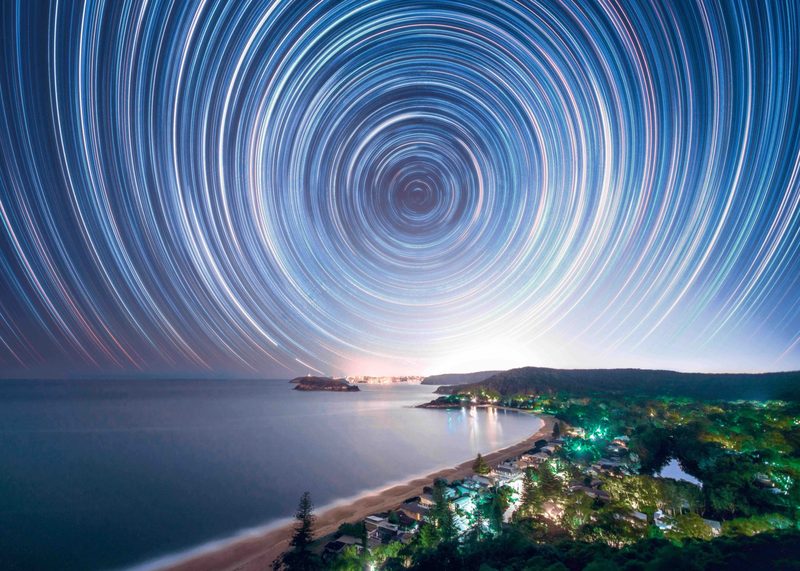
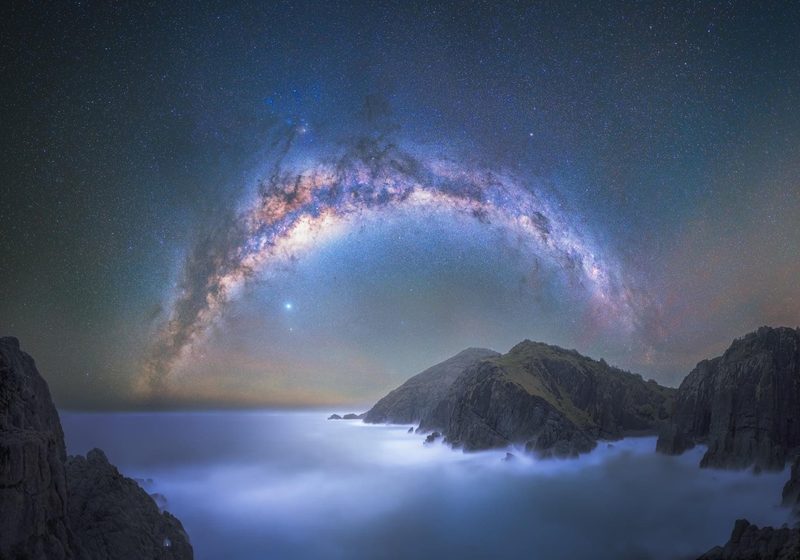
Night photography means dark roads, remote places and cold hours. A little planning covers almost all of it.
Where you're going, and when you'll be back.
Kangaroos and wombats are on the move from dusk to dawn.
Clear inland nights fall below freezing in winter.
Check tide times and never turn your back on the sea.
Mobile coverage disappears quickly outside towns. Carry water, food, spare fuel, a first aid kit and a charged power bank. A personal locator beacon or satellite messenger is cheap insurance. Unsealed roads can close after rain, so check road conditions before you set out.
Kangaroos, wallabies, wombats, emus and stock are most active from dusk to dawn, exactly when you're driving to and from a shoot. Slow down, use high beam when it's safe, and brake in a straight line rather than swerving. After a long night, sleep before you drive home.
Clear inland nights can drop below zero, even after a warm day. Dress in layers, with a beanie, gloves and warm boots, and bring a hot drink. Dew forms as the air cools, so a lens heater or a hand warmer strapped to the lens keeps the glass clear.
Check tide times before you go, and plan your way out for when the water rises. Rock platforms are dangerous: big waves arrive without warning, so never turn your back on the sea and stay well back in a swell. Tidal flats can flood quickly once the tide turns.
On warm nights snakes are active. Wear boots and long trousers, use a torch to watch where you step, and carry a compression bandage. If someone is bitten, keep them still, apply a pressure immobilisation bandage and call 000. In summer, carry more water than you think you need.
In bushfire season, check the fire danger rating and any total fire ban with your state fire service before you leave. On a ban day there are no campfires or other open flames. Park on bare ground or gravel, because a hot exhaust can set dry grass alight.
Ask the landholder before you go onto private land, and leave gates as you found them. National parks set their own rules for night visits, camping and drones, and some areas close after dark. Public land isn't always open at night either: in New South Wales, for example, travelling stock reserves in the east and centre are open only from sunrise to sunset.
All of Australia is Aboriginal and Torres Strait Islander Country, and many places hold deep cultural significance. Follow signs and the wishes of Traditional Owners. Some places ask visitors not to photograph them: at Uluru-Kata Tjuta National Park, for example, Anangu ask that certain sensitive sites are not photographed, and commercial photography needs a permit. Stay on tracks, take your rubbish home, and leave rock art and artefacts untouched.
Pack before you goThe Field Checklist covers gear, safety and settings for the night.
Open Field Checklist
Founding access to Milky Way One opens soon. Join the waitlist and David will let you know the moment it's ready.