−6
Open field
Canola, a lake or a church in the distance. The ground is a long way off.
15 s · f/2.8 · ISO 12800 · stackSix chapters in the order a night unfolds. Skim the headline, look at the picture, open a row when you want the detail. Every chapter ends with the free tool that puts it to work.
Three controls gather the light. Here's where David starts, and how he changes them when the scene changes.
For open country with a full-frame camera and a fast wide lens. A starting point, not a rule: always check the frame you actually captured.
White balance about 4500 K, fixed for the whole sequence. On your very first night with a kit lens, start at 30 s, the widest aperture and ISO 3200 to 5000. Stars may stretch a little at 30 seconds. That's fine while you learn.
Change one at a time, then look at the new frame.
How long light is collected. On a night dial, 20″ means twenty seconds, not 1/20. Longer gathers more light for the land, but the stars start to trail.
How wide the lens opens. A lower f-number lets in more light. Use the widest your lens handles well, and check the stars in the corners.
Brightens what the sensor already caught. It adds no light, and pushing it too far costs you room in the highlights, like the core.
David rates every scene on a scale from minus six to minus ten. The darker and closer the ground, the more it needs light of its own.
Canola, a lake or a church in the distance. The ground is a long way off.
15 s · f/2.8 · ISO 12800 · stack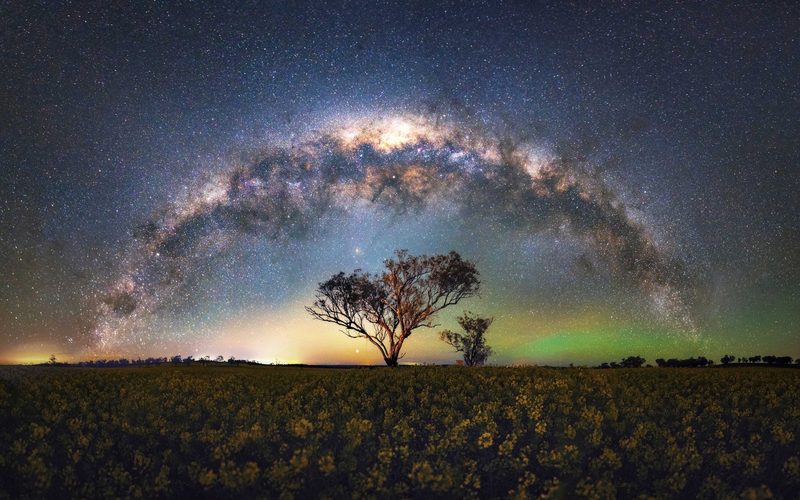
Same open country, with flowers or a tree you want to read.
About 20 s · watch the core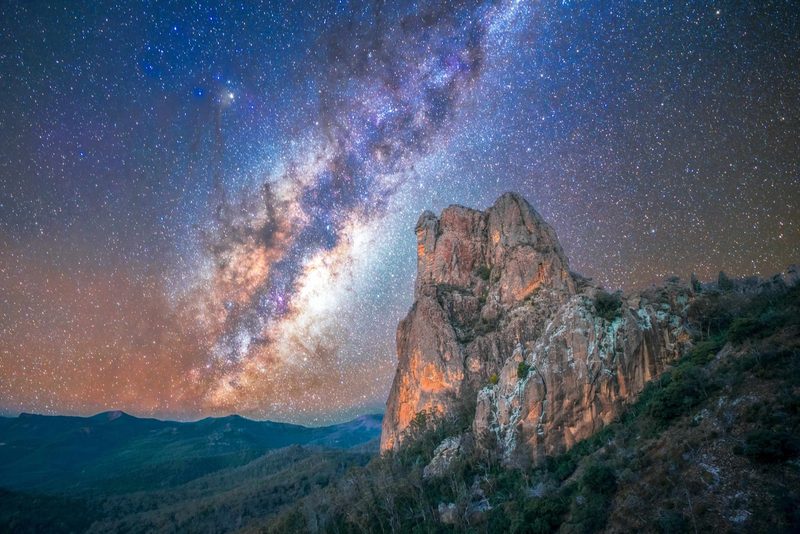
Rock at middle distance, or a building you want to keep.
About a stop more · check the histogram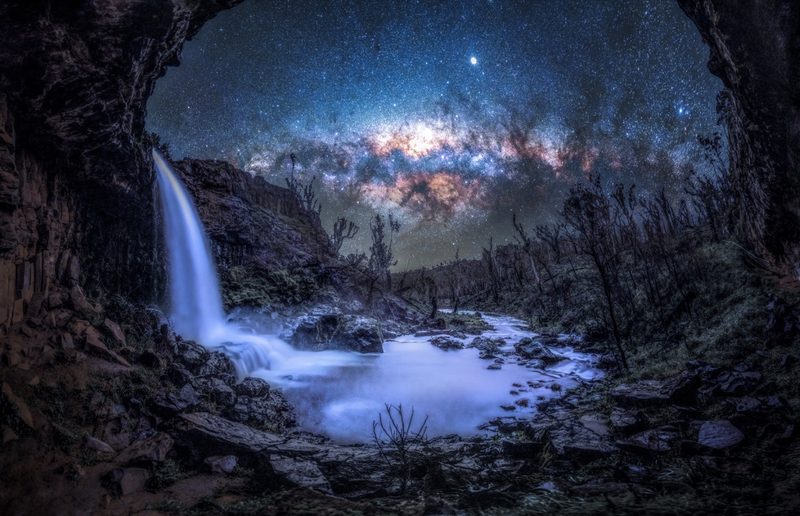
A dark gorge or waterfall wants more light than the sky can take.
Safe sky stack + foreground frames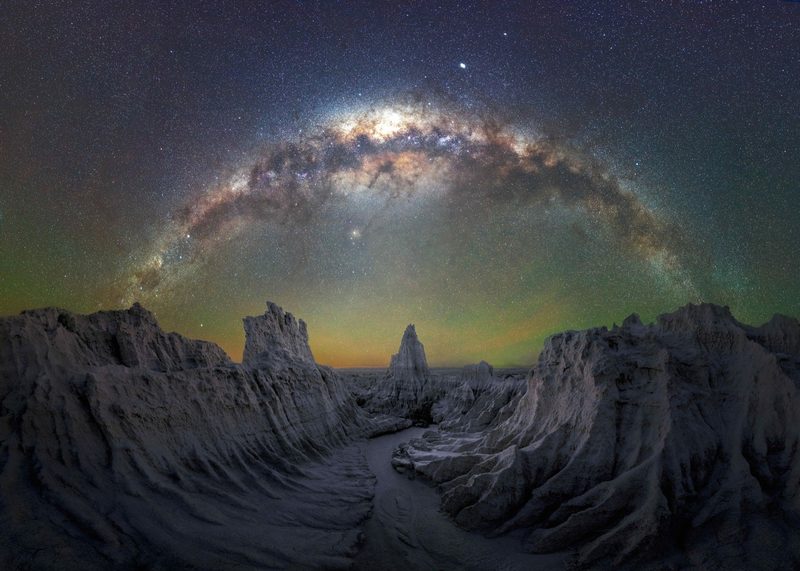
An intricate horizon. Push one frame and the glow along the edge goes first.
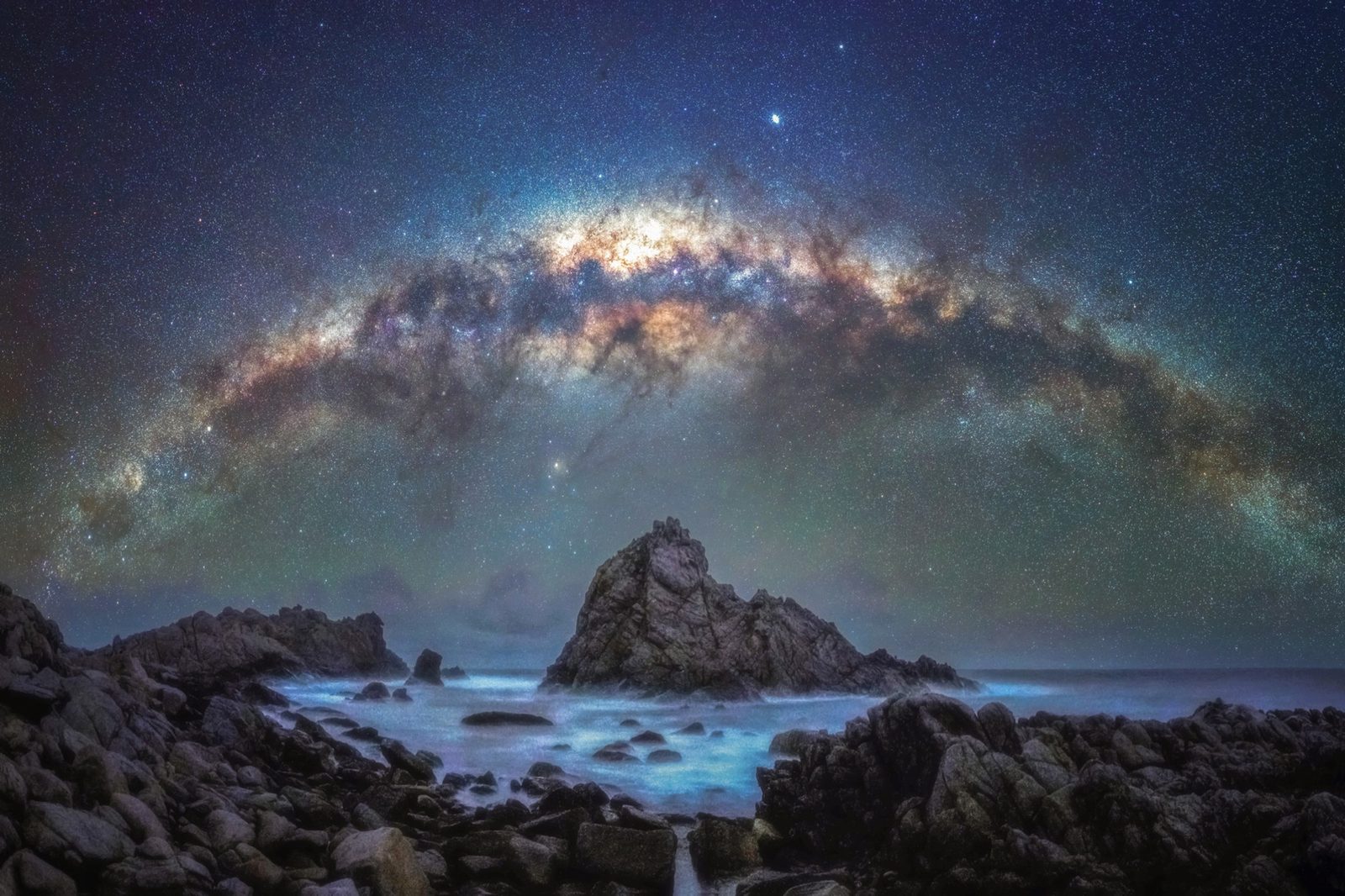
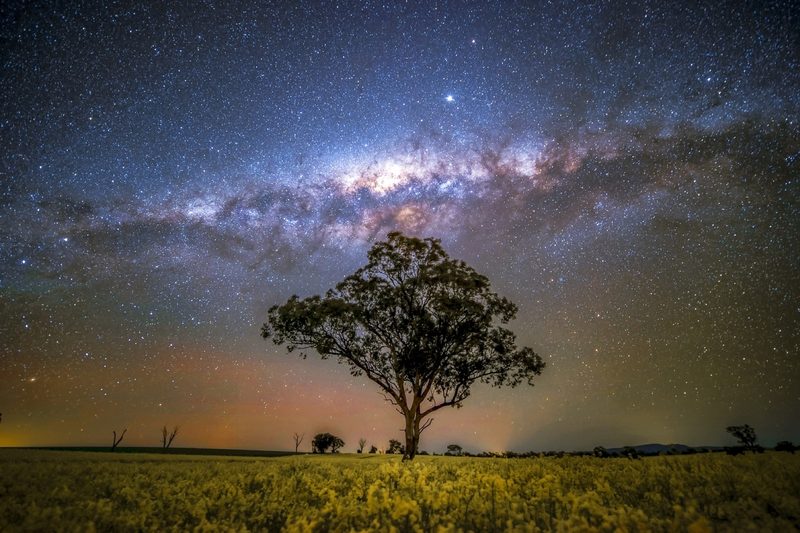
Protect the sky · mask with carePhotos by David Magro: Meadows II, Field of Stars (Merriwa), Spire, Paddys River Falls, Lunette (Walls of China, Mungo).
Make them at home, in daylight, so the dark has nothing to surprise you with.
Only the shutter and the aperture change how much light reaches the sensor. ISO amplifies what was captured, a bit like turning up the volume. That's why a longer total capture time, through stacking, beats simply raising ISO: more light means cleaner detail.
Higher ISO also shrinks your highlight headroom. In David's full-frame scenes, 20 s at f/2.8 and ISO 16000 is where an open Milky Way core can start to clip. Treat that as a warning sign, not a universal limit, and check your own captured highlights.
The rule of 500 estimates the longest shutter before stars trail: 500 divided by your focal length, after allowing for crop factor. At 14 mm on full frame that's about 35 seconds; on an APS-C camera at 18 mm it's about 18 seconds.
It's handy to know, but modern high-resolution sensors show trails sooner than the rule suggests. David puts foreground exposure and stacking first, and accepts a little movement when the land needs the light. Check the stars at full size and shorten the shutter if they bother you.
The rear screen is bright and flattering in the dark, so read the histogram instead. A night frame naturally sits to the left. Don't force it into the middle.
Recheck after you zoom, change lenses or bump the camera. A close foreground with a wide aperture may need a second frame focused on the ground, blended later.
Timers count in two different ways, and getting it wrong drops frames. Check your manual.
Long exposure noise reduction can add a processing wait after every frame, so David turns it off where the camera allows. Then run a five-frame test and count the files before you start the full sequence.
Try it with your cameraCamera Settings works out a starting exposure for your camera and lens.
Open Camera SettingsDarkness, the core and the Moon. When all three agree, you have a window. Then check the weather, and the place.
Astronomical night starts when the Sun is 18° below the horizon. Before that, twilight washes out the faint Milky Way. Twilight is still lovely for foregrounds.
The bright centre of our galaxy lies in Sagittarius. Wait until it's at least 15° up, clear of haze and hills. When it rises depends on the month.
A bright Moon near the core drowns it. Shoot near new Moon, or in the hours after the Moon sets. A thin crescent far from the core is fine.
On this example night it's dark from 7:15 pm, but the core doesn't clear 15° until 10:10 pm. The Moon rises at 1:30 am. That leaves three hours and twenty minutes of prime sky.
An hour or more is a good night. Under twenty minutes, stay home.
The core season in Australia runs from early February to early November. It starts as a sliver before dawn, fills the whole night in winter, then slips into the early evening and is gone after the first few nights of November.
From months away to the night itself.
City light bounces off the air and makes a glowing dome over every town. The Bortle scale rates sky darkness from 1, a truly dark sky, to 9, a city centre. You don't need a 1. A drive of an hour or two from a capital city, with the town glow behind you, changes everything.
From Australia the core spends most of the night in the southern half of the sky, so a town glowing to your north usually matters less than one to your south. The Location Atlas shows dark places near you.
From anywhere in Australia the core rises in the south-east, climbs to almost overhead and sets in the south-west. Early in the season you'll find it low in the south-east before dawn; late in the season it's sinking in the south-west after dusk.
The band also changes angle through the night. Sky Viewer shows exactly where it will sit above your foreground, at any time.
A little moonlight isn't always the enemy. A crescent Moon low in the west after dusk, or setting before the core climbs, can light a foreground softly and then get out of the way. Many of the best nights are just before or after new Moon, when the Moon sets early or rises late.
Forecasts change. Check again on the day, and once more before you drive.
Visit your spot before dark, or on an earlier day. Check the access, the path in, where you'll stand, the tide if you're on the coast, and which way is south. Take a test frame of the composition while you can still see.
Australia has three time zones, and daylight saving runs only in some states. Our tools use the place's own local time, so the answer is always in the time on your watch when you get there. The Australia guide has the details.
Find your next windowThe Night Planner gives a yes or no for any night, years ahead.
Open Night PlannerEvery strong night photo answers one question: how does the ground connect to the stars? These are the twelve ways David answers it.
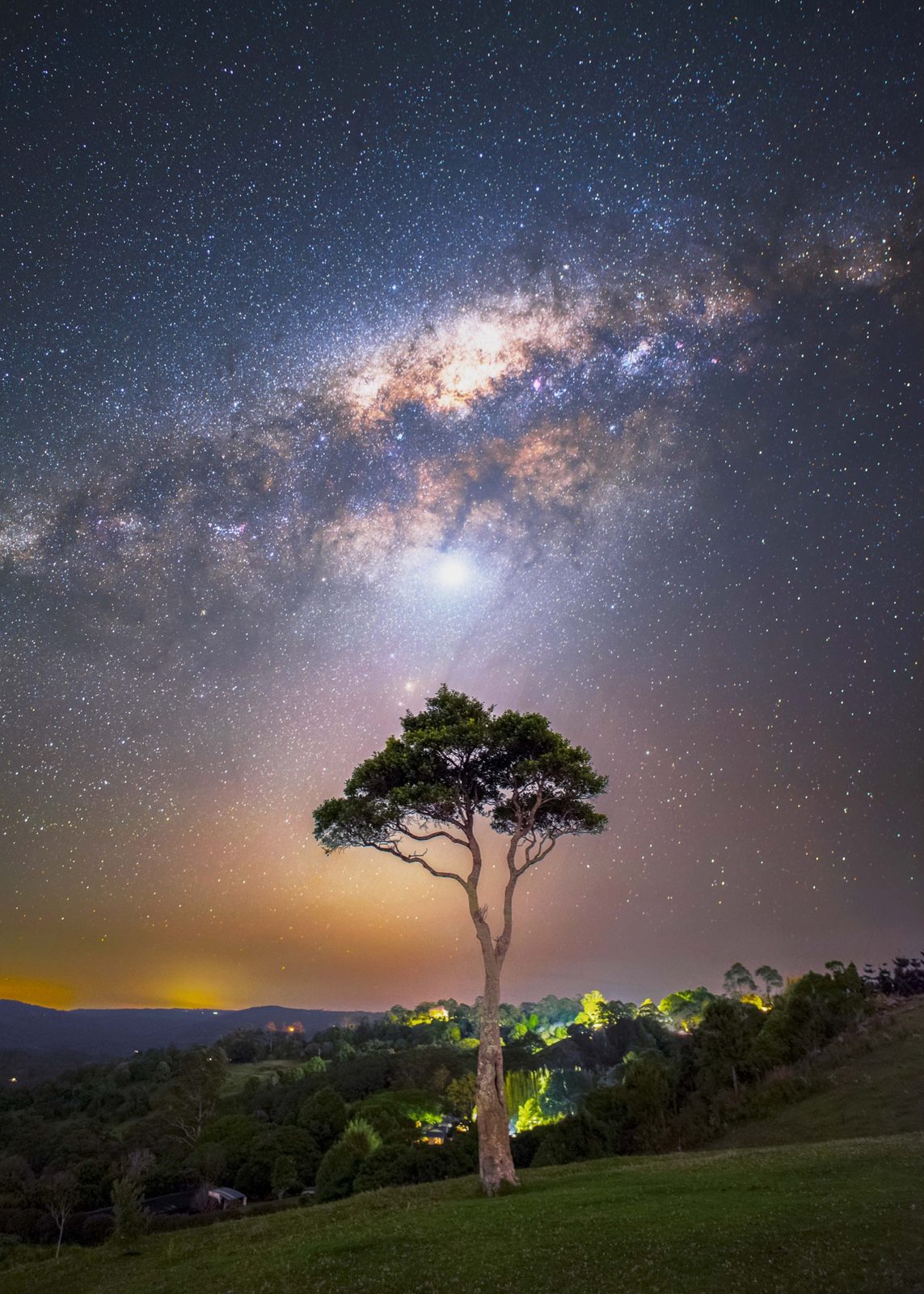
The rule of thirds is a tool, not a law.
For subjects that face you, are symmetrical or stand like a monument: a lighthouse, an arch, a lone tree. Calm and deliberate.
For subjects that lean, move or look one way. Let the core balance it on the other side.
Portrait suits a tall subject with the band rising straight up behind it. Landscape suits a band lying on a diagonal or a wide foreground. When the band arcs across the whole sky, only a panorama of several frames will hold it.
The Milky Way tilts through the night and through the season. A composition that fails at 9 pm may line up perfectly at 1 am. Use Sky Viewer at your spot to see the angle before you go, then return when it lines up.
Turn on your camera's level. On a symmetrical frame or a reflection, even one degree of tilt is obvious. Fixing it later costs pixels at the edges.
If you light the foreground at all, use a dim, warm and even light from the side, and keep it the same for every frame. Turn your headtorch off during exposures, and never shine a light across someone else's frame without asking.
Keep the figure small. Ask them to stand completely still for the whole exposure, and place them where their outline is clear of the horizon. A torch pointed at the sky should be dim, or it will flare.
Practise on David's photosComposition shows the patterns on his full photographs, with guides you can switch on.
Open CompositionMost lost nights are lost in the first ten minutes. Set up early, make one test frame, inspect it properly, and only then commit.
A 30 second exposure followed by a 5 second pause gives a 35 second interval from the start of one frame to the start of the next.
The night is long and usually colder than you think.
Inland winter nights often drop below freezing. Pack a beanie, gloves and a layer more than you think you need.
Your eyes take 20 to 30 minutes to adjust to the dark. A red headtorch keeps that, and keeps the peace with other photographers.
On still, humid nights the lens fogs over. A lens heater, or even a hand warmer strapped to the barrel, saves the sequence.
Cold drains batteries fast. Keep spares warm in an inside pocket and swap before a long sequence, not during it.
Say where you're going and when you'll be back. Phone coverage in the country can disappear without warning.
Kangaroos are most active around dusk and dawn, exactly when you're driving in and out. Slow down, and don't drive tired.
Before the sequence, give a tripod leg a gentle tap and watch the live view settle. If it wobbles for long, tighten the leg locks, the head and the plate, lower the centre column, and get the strap out of the wind. It's a nudge, not a strike.
Start your timer and let it run five frames. Then count the files and check the timestamps. If one is missing, the interval is too short or noise reduction is getting in the way. Only start the full 16 to 36 frame sequence once five in a row have saved.
Zoom into the test frame at 100%. Check star focus in the centre and the corners, the foreground detail, the histogram's right edge and anything creeping in at the frame edges. Change one thing, then make another test frame.
Coastal shoots are beautiful and dangerous in the dark. Check the tide times and the swell before you go, never turn your back on the sea on a rock platform, and stay well back from cliff edges you can't see properly.
Copy every photo to your computer and to a second place, such as an external drive or cloud backup. A card that holds the only copy isn't ready to format.
Take the checklist with youEverything to do before, during and after the shoot, in order.
Open Field ChecklistStacking cleans the sky. A blend gives a dark foreground its light. Then a light hand on colour and contrast, so it still feels like the night you stood in.
Noise is random, so it changes from frame to frame while the stars stay put. Average several aligned frames and the noise smooths away while the stars stay sharp.
frames halve the noise
frames quarter it
Random noise falls with the square root of the number of frames. Stacking can't fix missed focus, star trails or a clipped core.
Five things you can do with a night of frames.
Shoot 16 to 36 frames with nothing changed, then let software align the stars and average them.
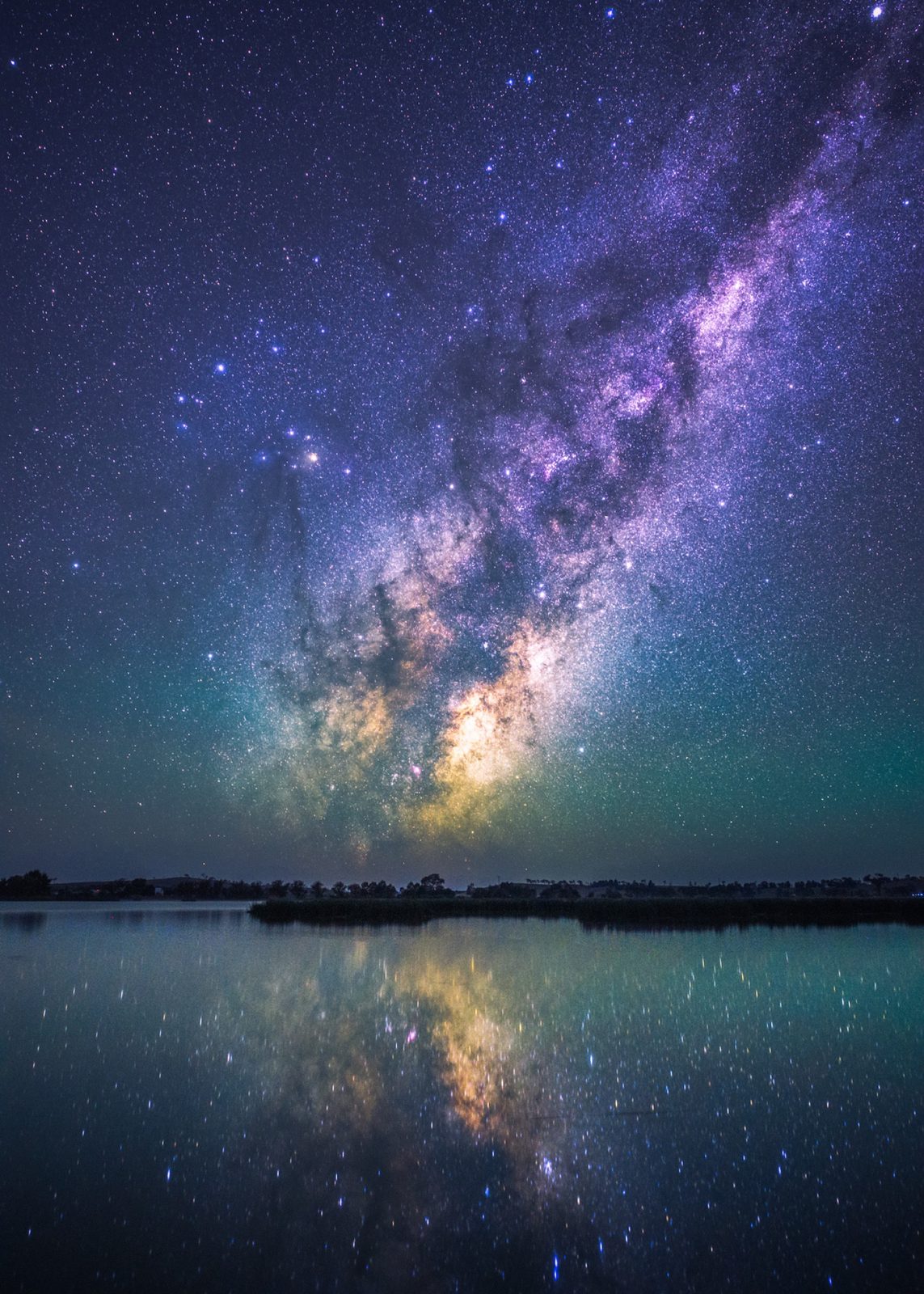
When the foreground is too dark for the sky's exposure, give it frames of its own, then combine the two.
David doesn't lay a twilight sky over a night foreground. Both halves come from the same night and the same spot, so the light stays honest.
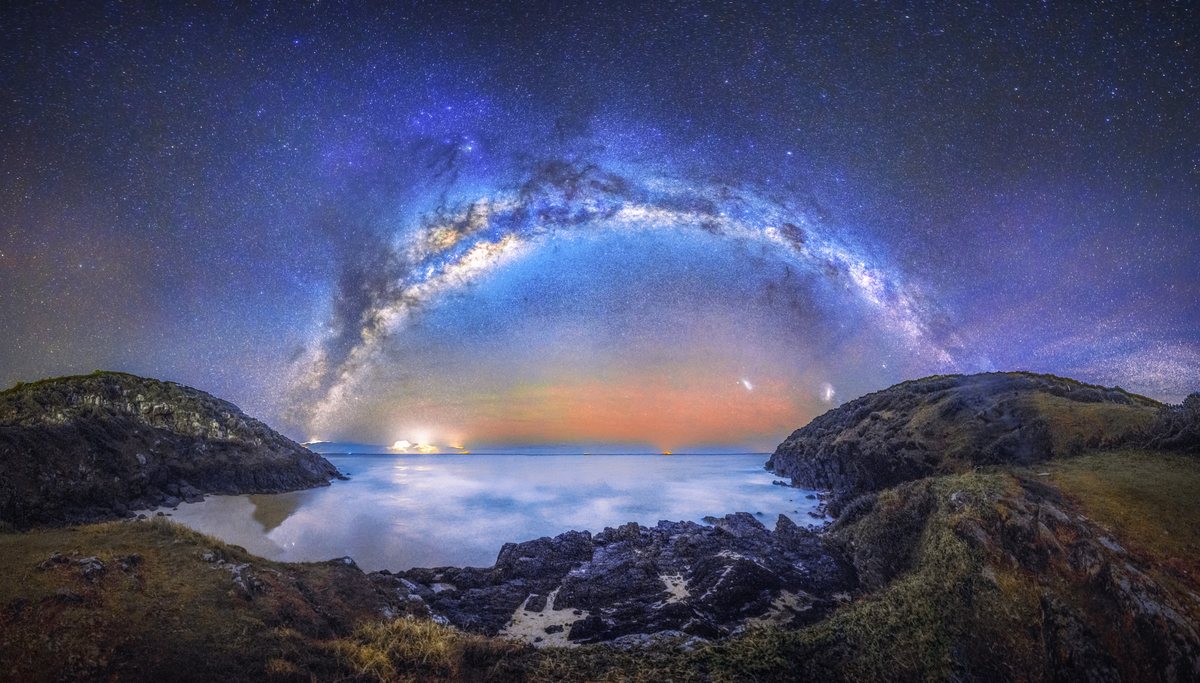
Several overlapping frames, merged into one wide view. It's how David holds the full arch of the Milky Way.
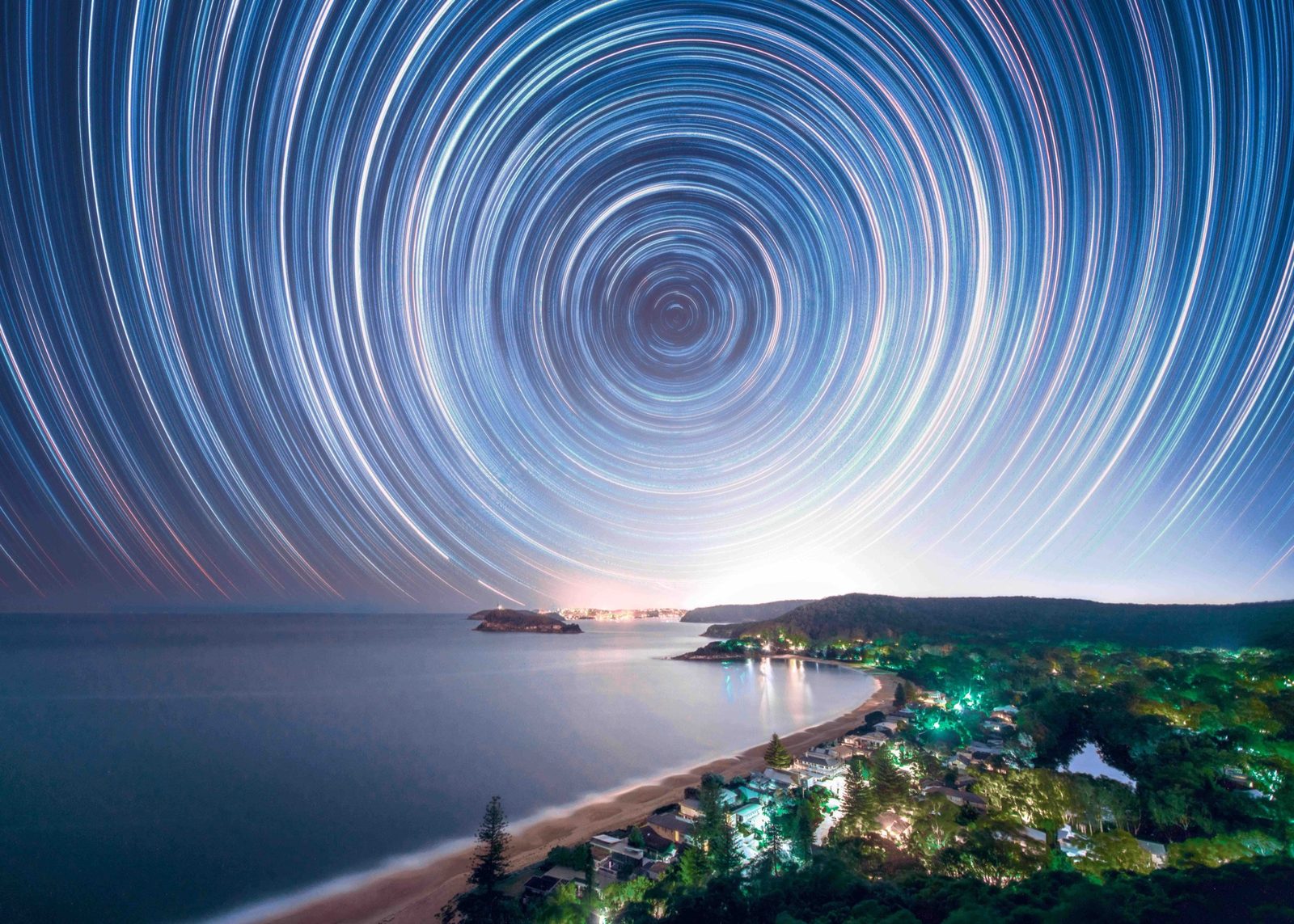
Instead of freezing the stars, keep their movement. Point south and they circle the south celestial pole.
The same frames, played back as a movie. Capture time and playback time are two different things.
The free Timelapse Scrubber lets you scrub to any minute of a night, using files that never leave your device.
Three folders for every shoot, and two copies of everything before a card is formatted.
The RAW files exactly as they came off the card, named by date and place.
Stacks, blends and edit files. Keep them apart so you can always go back.
Finished files sized for print, web or social, each made for a purpose.
Heavy clarity, dehaze and saturation make a Milky Way look crunchy and fake. If the sky looks brighter than the land would ever allow, ease off. The aim is the night you saw, a little clearer.
Software gets better every year. A RAW file kept safe today can be edited far better in five years. Keep originals untouched, in two places, and work on copies.
David's own desktop editor brings his whole workflow into one place. It's coming soon.
From Australia the centre of our galaxy climbs almost overhead, and the far southern sky holds sights much of the world never sees.
Extend the long arm of the Southern Cross about four and a half times its length. Below that point is due south.
Before dawn early in the year, all night in June and July, in the evening by spring. Gone from early November to early February.
Two small galaxies you can see with your own eyes, and the Emu in the Sky in the dark lanes of the Milky Way.

Founding access to Milky Way One opens soon. Join the waitlist and David will let you know the moment it's ready.