
Large Magellanic Cloud
About 160,000 light-years away. A small galaxy held close by our own, easy to see with the naked eye from a dark site.
- Best evenings
- December to March
From Australia the core of the Milky Way climbs higher than it does for almost anyone in the north. And the far southern sky holds sights much of the world never sees.
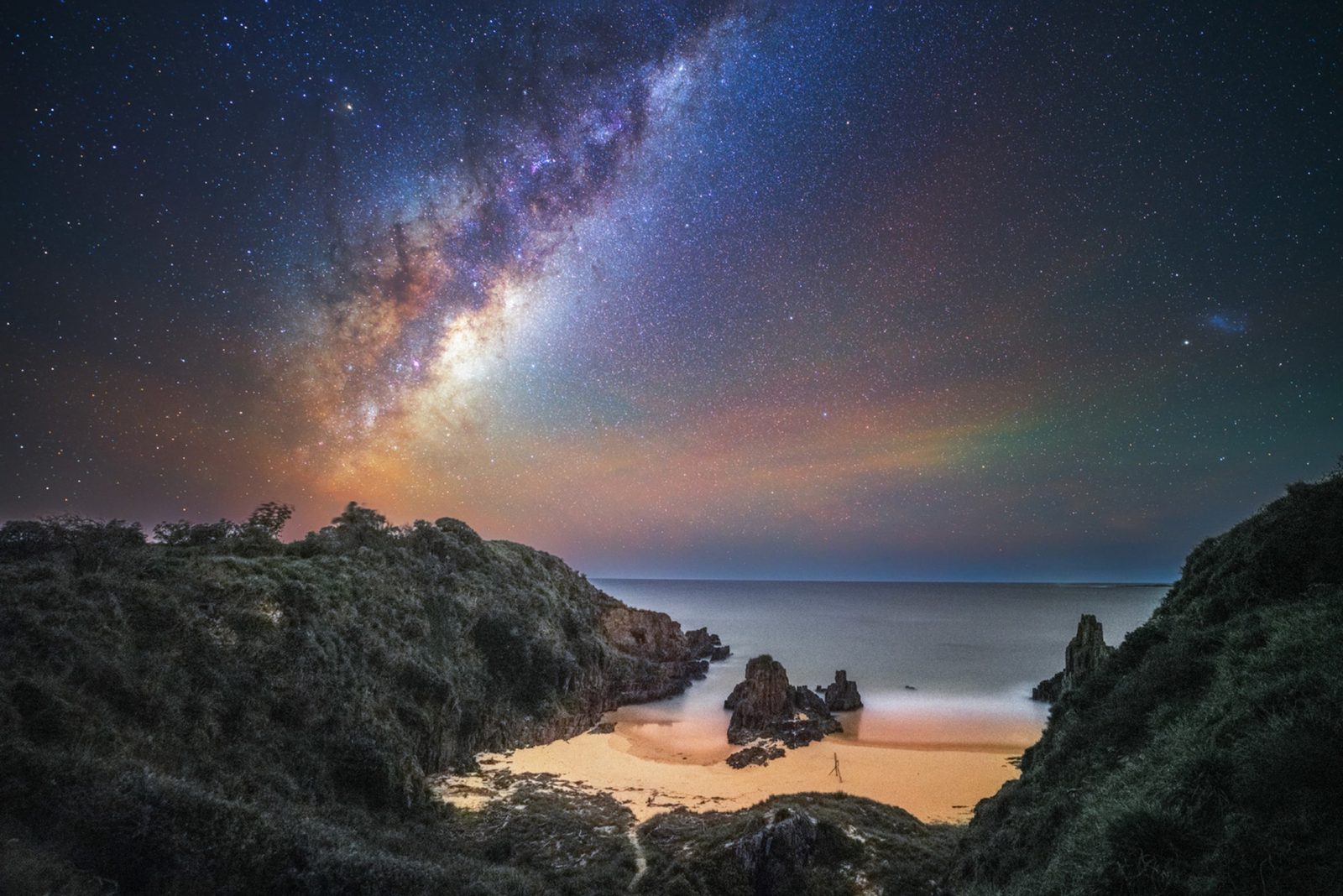
Light from a core near the horizon crosses several times more air, haze and city glow than light from straight up. Pick a city to see how high the core climbs at its highest.
Highest altitude = 90° minus the difference between your latitude and the core's declination (−29.0°, Sagittarius A*, SIMBAD). Refraction ignored. Air to look through is the relative airmass (Kasten and Young).
of core season everywhere in Australia, early February to early November, from pre-dawn starts to all-night winter shows.
See it month by monthlight-years to the centre of our galaxy. The bright glow you photograph is the crowded bulge of stars around it.
of Australia's land sits under a pristine night sky, the least light-polluted territory in the G20.
Falchi et al., Science Advances, 2016Two neighbouring galaxies, the nearest star system, the brightest globular cluster and the smallest constellation. Choose where you're standing.
About 160,000 light-years away. A small galaxy held close by our own, easy to see with the naked eye from a dark site.
About 200,000 light-years away. It and the Large Cloud are pulling on each other, trailing streams of gas.
The smallest of the 88 constellations, on the Australian flag. Its long arm points towards the south celestial pole.
The brighter of the two Pointers beside the Cross. At about 4.3 light-years, it's the closest star system to the Sun.
Second only to Sirius in brightness. From Melbourne and further south it never sets.
A vast glowing cloud of gas about 7,500 light-years away. A hazy patch to the eye, a showpiece in a long lens.
The largest globular cluster in our galaxy, a ball of about ten million stars. To the eye, a fuzzy star.
The second-brightest globular cluster in the sky, sitting right beside the Small Magellanic Cloud.
Swipe to see all eight.
Visibility from each object's declination (SIMBAD): an object never rises north of 90° minus its declination, and never sets south of the same latitude in the southern hemisphere. Best evenings: highest around 9 to 10 pm from southern Australia. Distances: ESO, NASA, ESA.
There's no bright pole star in the south. Two simple lines find the south celestial pole instead, the point the whole sky turns around.
Watch out for the False Cross, further to the west. It's larger, dimmer, and has no Pointers beside it.
Aboriginal and Torres Strait Islander peoples have read this sky for many thousands of years, for the seasons, for navigation, for law and for story. That knowledge belongs to many different nations and communities, and it is still held and taught today.
In many Aboriginal cultures the dark clouds of dust in the Milky Way form figures, not just the stars. The best known is the Emu in the Sky. Its head is the Coalsack, the dark patch beside the Southern Cross, and its neck and body stretch along the dark lanes towards the core.
The Emu's position changes through the year. For some communities that change is linked with the breeding of emus on the ground, one of many ways the sky marks the seasons. In the Torres Strait, the stars guide the seasons for planting, fishing and travel by sea.
Look on dark, moonless autumn and winter evenings, when the Emu's body stretches along the Milky Way from the Southern Cross towards the core. Stories differ from Country to Country and some are not shared publicly. To learn more, look for First Nations-led tours, rangers and resources, and respect any signs or wishes about photographing places of cultural significance.
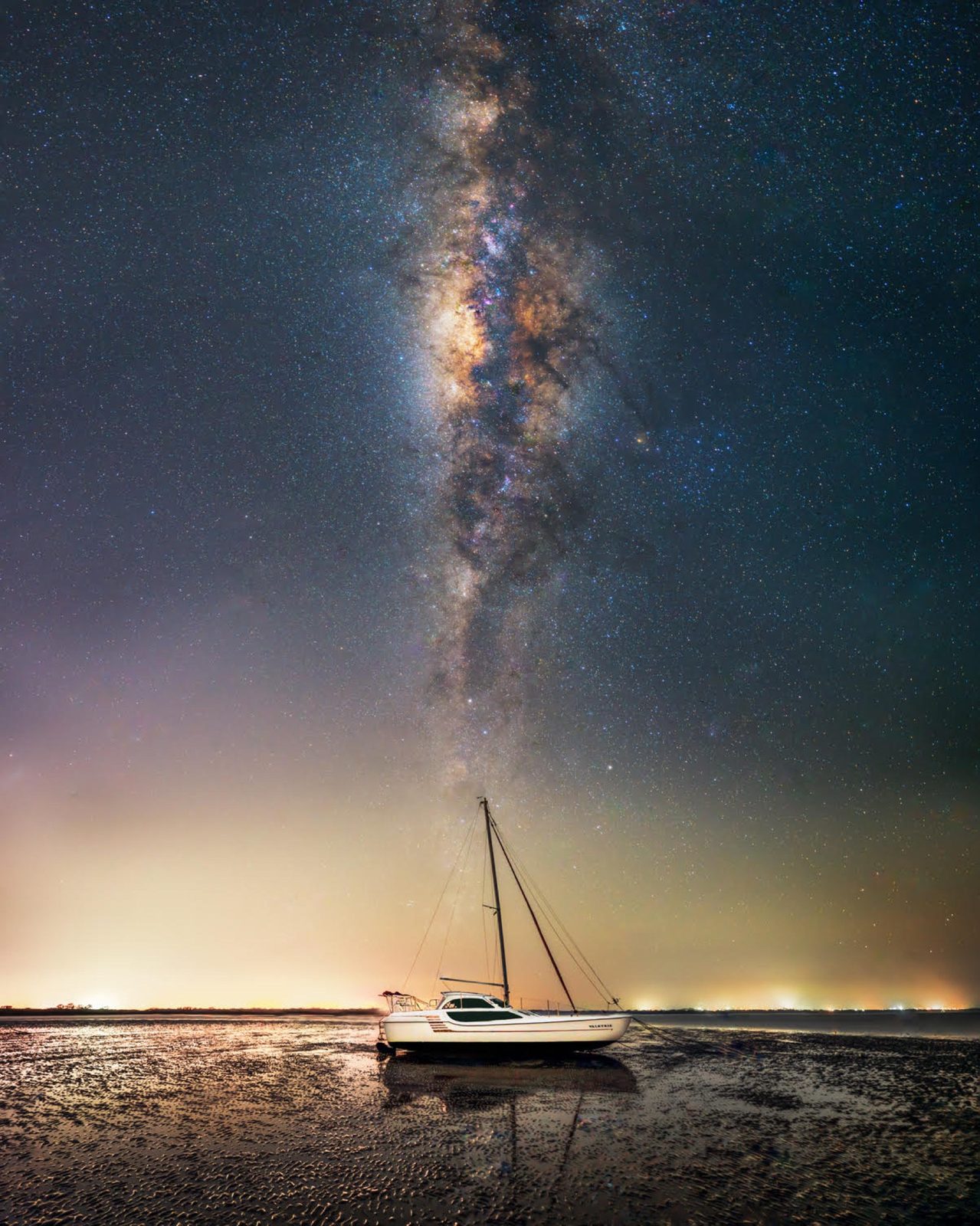
When particles from the Sun strike the upper atmosphere, the southern sky can light up green and red. Tasmania is best placed. The Victorian coast sees it in stronger storms, and further north it takes a severe one.
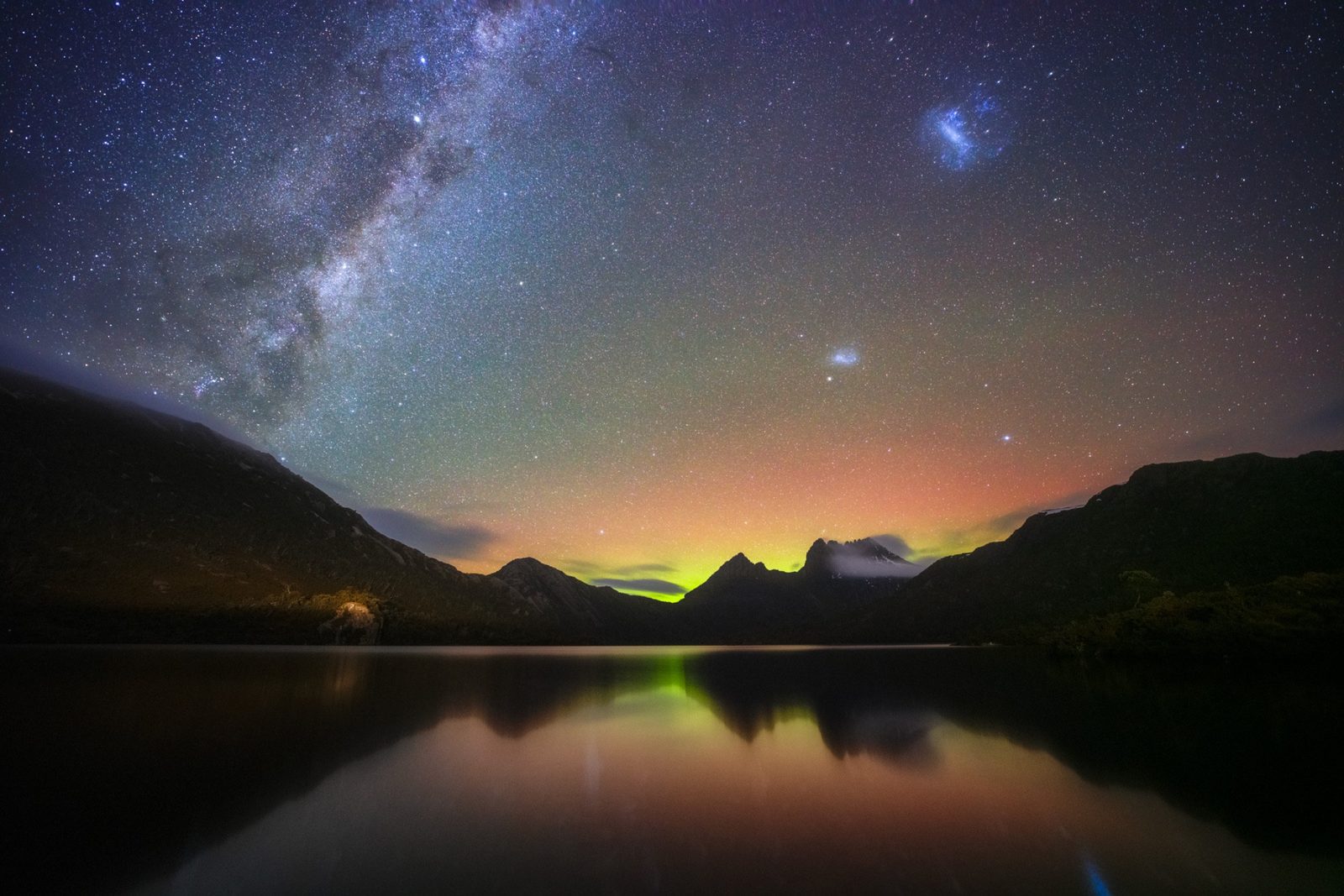
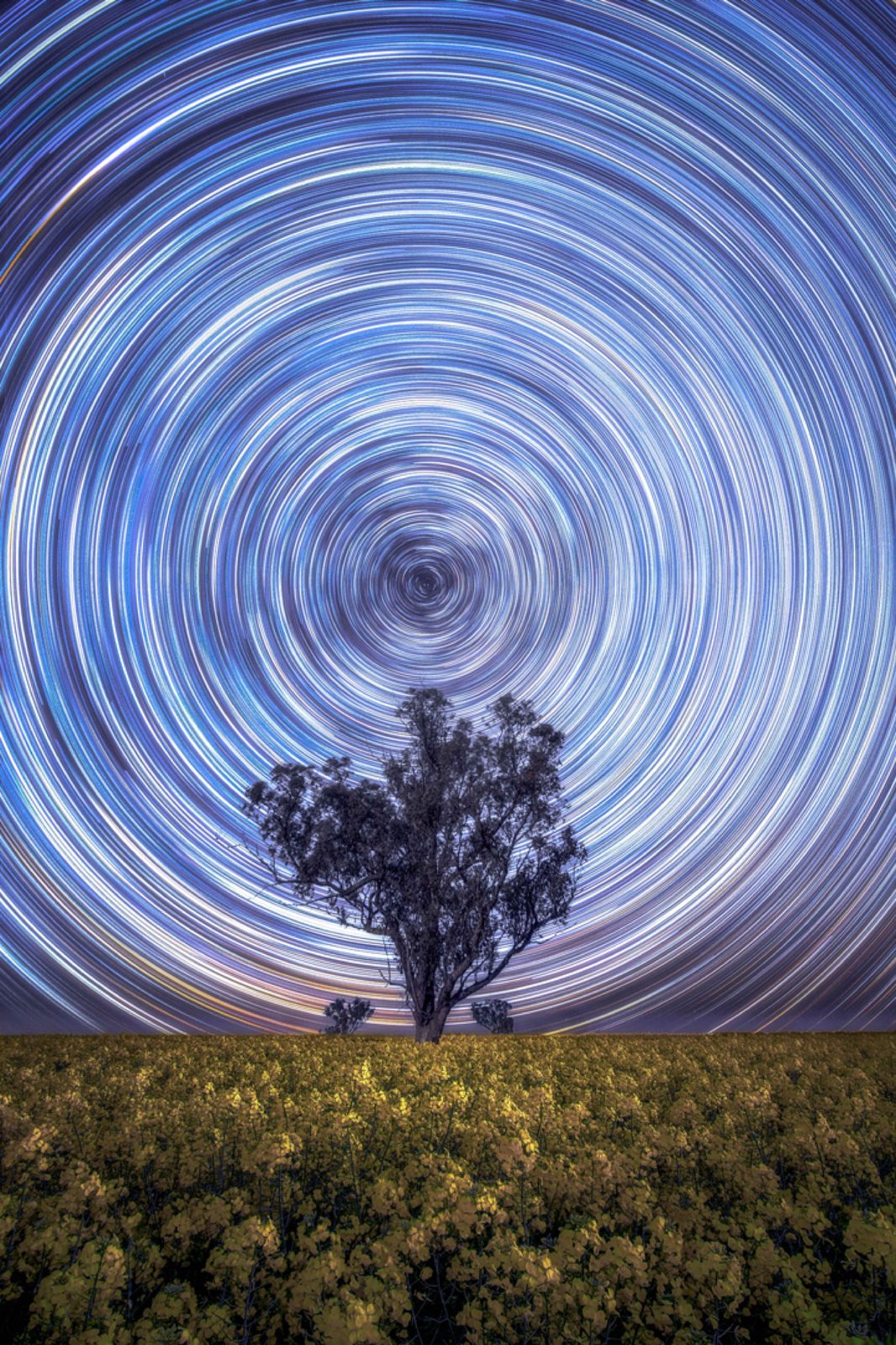
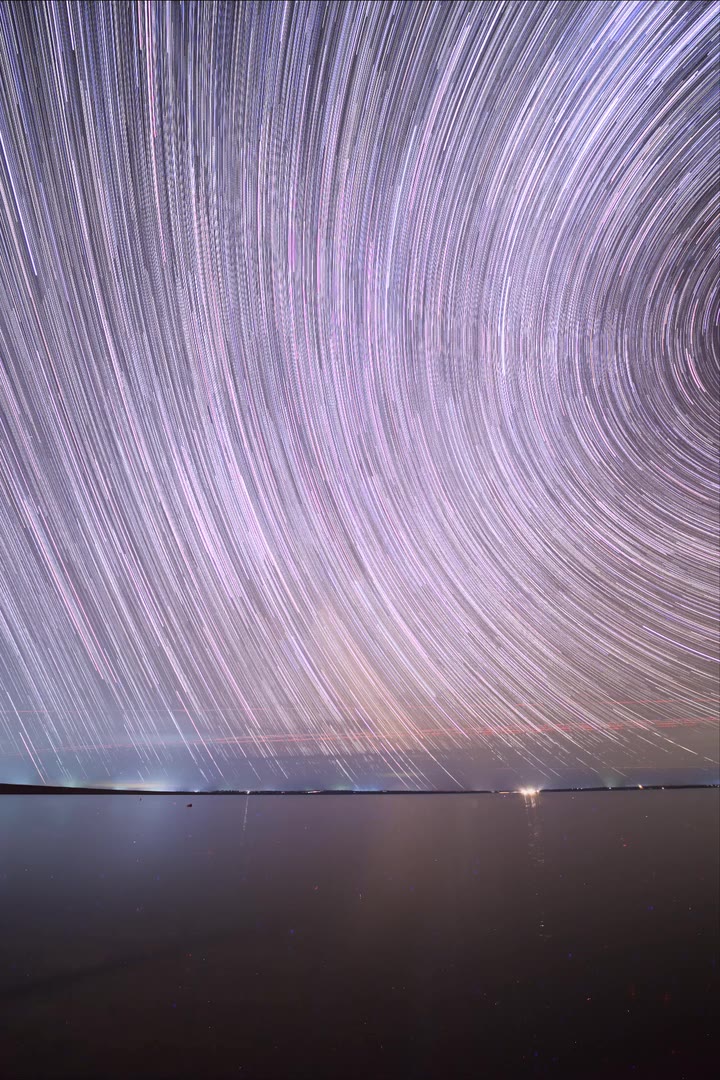
The south celestial pole sits above due south, as high as your latitude: about 12° from Darwin, 27° from Brisbane, 34° from Sydney and 43° from Hobart. Put it over your subject and the trails become a target.

Founding access to Milky Way One opens soon. Join the waitlist and David will let you know the moment it's ready.